

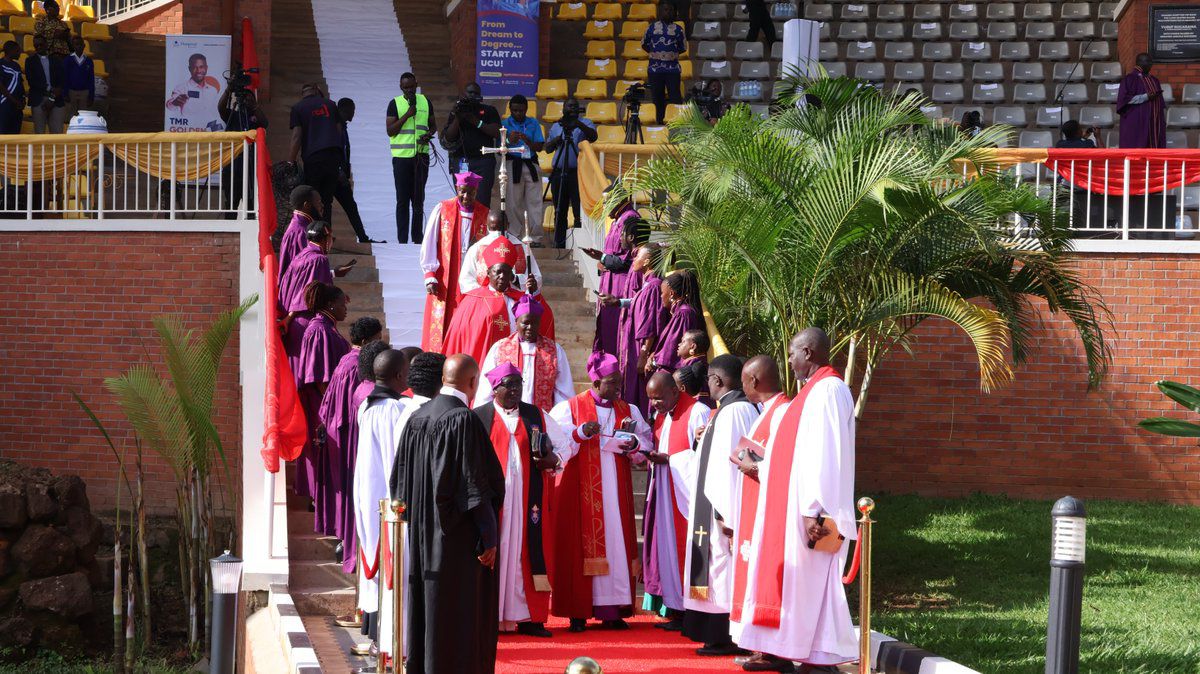
Calls for national unity, reconciliation, sacrifice and moral leadership dominated this year’s Uganda Martyrs Day celebrations at the Namugongo Martyrs’ Anglican Site, where religious and government leaders urged Ugandans to rise above political, tribal and religious divisions for the good of the nation.
Representing government, the newly appointed minister for Public Service, General Edward Katumba Wamala, reflected on the enduring legacy of the Uganda Martyrs and challenged citizens to embrace selfless service.
“Today's message challenges us all. We are often called upon to sacrifice our time and effort in service to our nation and humanity, yet unlike the Martyrs who gave their lives, we are sometimes hesitant even in our smaller sacrifices,” he said.
General Katumba further urged Ugandans to put aside divisions and focus on national development.
“Let us break down the walls of political and religious differences. These divisions are often artificial. The political season is behind us, its time to work,” he said.
The celebrations were held under the theme, “Christ Our Peace: Breaking Walls, Healing the Nations.”
In his sermon, the Archbishop of the Church of Uganda, The Most Rev. Dr. Stephen Samuel Kaziimba Mugalu, used the occasion to call for national unity, dialogue and reconciliation amid growing tribal, religious and political divisions.
Drawing inspiration from the Uganda Martyrs, Archbishop Kaziimba reminded worshippers that the martyrs came from different ethnic backgrounds and represented a powerful example of unity beyond tribal and political identities.
“Let us use Uganda Martyrs came from different tribes, most were Baganda but also we had Basoga, Banyoro, Bacholi, representing different tribes. They broke the barrier of tribalism, religion and political division and we ought to do the same,” he said.
“Both Anglican and Catholic martyrs were killed and buried together at Namugongo, so we ought to embrace unity, integrity and strong moral values as the country continues to navigate social and economic challenges.”
Archbishop Kaziimba emphasized the importance of national cohesion and collective responsibility in building a peaceful and prosperous Uganda.
“As Ugandans, we must remain united despite our differences and work together for the common good of our nation,” he said.
He noted that Uganda’s progress depends not only on economic advancement but also on the moral character of its people, urging leaders at all levels to demonstrate honesty, accountability and compassion in public service.
“Our nation needs leaders and citizens who uphold truth, justice and integrity in every aspect of life,” he said.
Archbishop Kaziimba further called upon religious institutions, families and communities to actively nurture values that promote peace, mutual respect and social harmony.
Reaffirming the Church of Uganda’s commitment to national development and reconciliation efforts, Archbishop Kaziimba encouraged citizens to remain hopeful and continue working together to overcome national challenges.
He also expressed appreciation to General Katumba, noting that it was through his leadership at the Ministry of Works and Transport that the Namugongo Anglican Martyrs Site received funding for renovation works.
Archbishop Kaziimba further commended the Government for providing Shs 2 billion towards this year’s celebrations.
Concluding his remarks, Archbishop Kaziimba urged continued adherence to public health measures.
“Yes, we may not have the opportunity to greet one another, hug, and interact as we normally would, but let us continue to observe the SOPs and follow the guidelines in place,” he said.
This year’s celebrations took place under exceptional circumstances following President Museveni’s May 17 decision to postpone the annual pilgrimage after consultations with health experts and religious leaders aimed at containing the spread of Ebola Virus Disease (EVD).
The decision was made amid concerns that the large influx of pilgrims, particularly from eastern Democratic Republic of Congo where an Ebola outbreak has been reported, could increase the risk of transmission.
As of press time, the Ministry of Health had confirmed six new Ebola cases, bringing the country’s total number of confirmed cases to 15.
Of these, 12 patients were admitted to treatment facilities, two had been discharged, one death had been recorded, and 668 contacts remained under follow-up.
Observed annually on June 3, Uganda Martyrs Day commemorates the 45 Christian converts executed between 1885 and 1887 on the orders of Kabaka Mwanga II of Buganda after they refused to renounce their faith.
The annual pilgrimage to the Anglican and Catholic shrines at Namugongo attracts more than two million worshippers from across East and Central Africa, making it one of the largest religious gatherings in the world.
